
Designing summer-resilient borders has become increasingly important as British summers grow hotter and drier.
Plans: drought-tolerant and long-flowering
Summer droughts are no longer rare, and the borders that survive are those that were designed to cope from the start. This is my practical West-Country approach to drought-tolerant, summer-resilient borders – right plant, right place, low irrigation, strong seasonal rhythm.
A summer-proof border is not a harsh, desert composition – it’s a design that keeps its poise when the weather turns mean. I’ve learned over the years that good planting isn’t about defying climate, but adapting to it. These borders make the most of dry, lean soil and strong light, keeping colour and structure long after the rest of the garden starts to wilt.
The idea is simple: building a planting that thrives on less; choosing plants that find drought easy; layering them for shade and texture; letting them knit together until they need almost no help.
I include below, two illustrations of borders with plan and plant list, designed to remain resilient through increasingly dry summers.
Border recipe: core principles
Planting approach
Every garden has its own character. The ground, the light, the movement of air — no two spaces behave quite the same, and that’s what makes design interesting. The planting plans you’ll see here aren’t recipes to follow line for line; they show how a border thinks when it’s built for drought and heat.
I build borders that work with what’s already there – the lean soil, the slope, the aspect. Each plant has a job: to shade the ground, to hold form through summer, to take over when another fades. When the structure is right, the rest almost looks after itself.
How the method works
If you wanted to, you could use these layouts to guide a border of your own — but they’re really here to explain the method behind the result.
I start with structure, then texture, and only then colour. It’s a rhythm, not a formula. The border shapes are adjusted for space and light, the planting density tuned to the soil’s character. The result isn’t an imitation – it’s a living design that belongs to its place.
When I plan gardens for clients, that’s always the goal: a planting that behaves naturally, but has been thought through to the last detail.
Why borders fail in hot, dry summers
For a broader look at how to future-proof your garden, see my guidance in drought-smart design.
Care & maintenance
Borders don’t exist in isolation; they belong to the rhythm of the whole garden. Each part – trees, lawn, paving, soil – affects the others. When a border is designed properly, it plays its part in that balance, catching shade, conserving moisture, and easing the demands on irrigation. Good design means less work and less water, not because of gadgets or clever systems, but because the planting and the place understand each other.
Watering in practice
Water has become the most precious garden material, so it has to be used with purpose. When I design or plant a new border, watering is only about establishment – helping roots find their depth and independence.
At first, I soak the ground thoroughly after planting and repeat once or twice while the roots settle. After that, I hold back. Frequent light watering does more harm than good, keeping the surface damp while the deeper soil stays dry.
The aim is to train plants to look for moisture, not wait for it. Within a season or two, the roots are where they need to be, and the border carries itself.
When a planting is designed around the site’s conditions – soil texture, aspect, and canopy – irrigation stops being a routine. It becomes an occasional kindness during extreme heat, nothing more.
1) Silver-blue scheme – low intervention, dry summer
Look: silvers and blues with upright rhythm and airy late colour. Needs decent drainage.
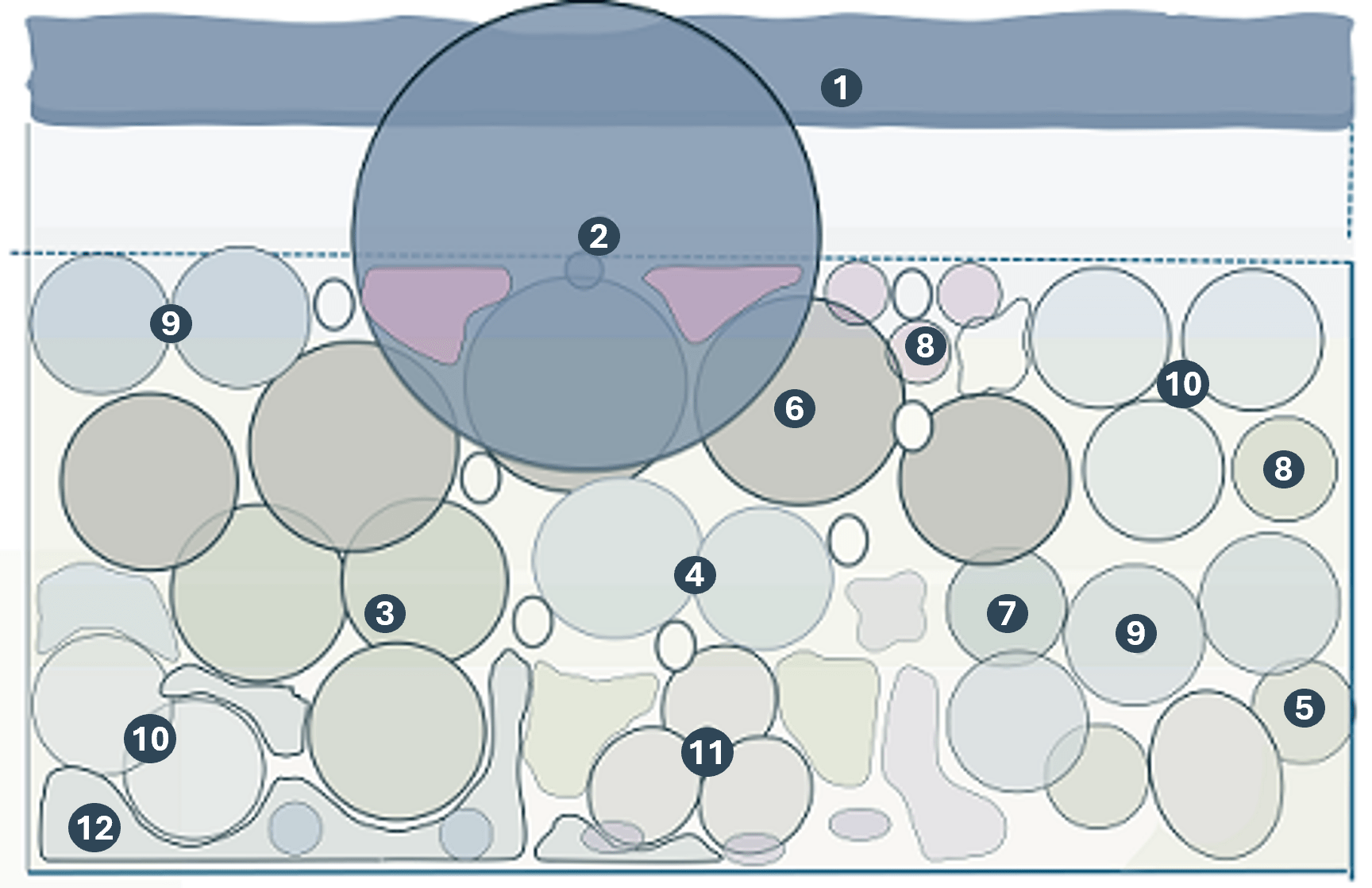
Plant list for a border about 5m × 8m
Design notes & care
This is a low-intervention border designed to hold its shape and colour through dry summers. Grasses are cut back once in late winter, with salvias and nepetas tidied as needed to keep them compact. The soil is kept lean and free-draining rather than rich – drainage and light matter more here than feeding.
Evergreen Phillyrea provides the upright rhythm and backbone. A mid-layer of Salvia and Nepeta softens the structure and carries long-season colour, while Stachys, Achillea, and Echinops knit the front edge in silvers and soft ochres.
The layout is a worked example, showing how plants with similar habits and requirements can be combined to create structure, repeat, and resilience. It is not intended as a planting template to copy directly.
2) Clay-tough warm scheme (decent clay, sunny)
Look: warm yellows/ochres with strong seedheads; stands up on clay. Avoid waterlogging.
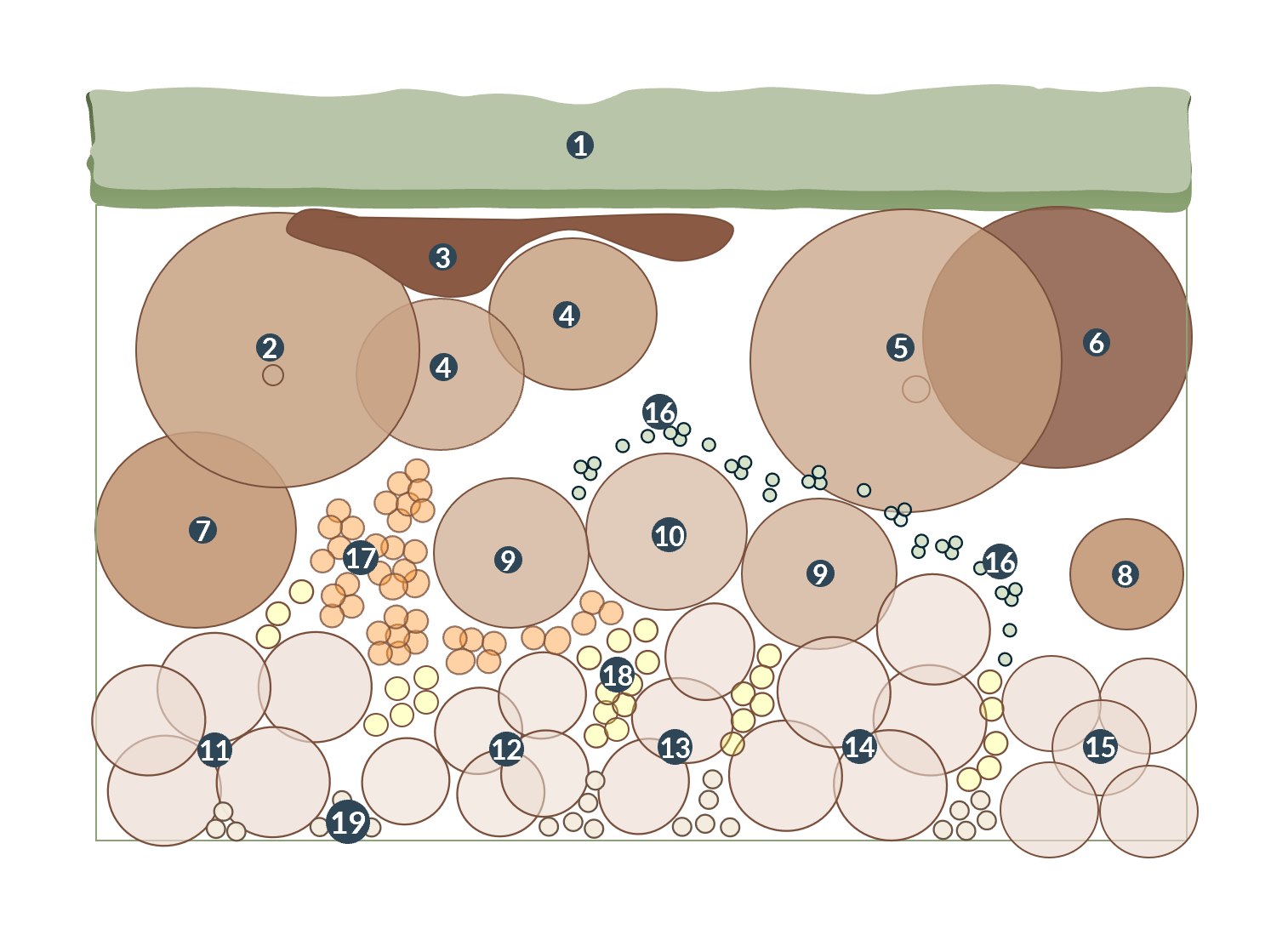
Plant list for a border about 3m × 5m
Guidance
These layouts are examples — not instructions. They illustrate how plants with similar habits,
soil preferences, and tolerances can be arranged to create structure, rhythm, and seasonal
interest in challenging conditions.
How to read these layouts
Treat each scheme as a worked illustration of spacing, layering, and plant relationships.
The exact numbers are not fixed; they simply demonstrate proportions.
Plan a border that thrives in dry summers
For a planting plan tailored to your own garden, I’m always happy to help.
We can adapt one of these schemes to your garden or design something completely new.
Call
07983 873 895
·
Email
edward@ashburygardening.co.uk