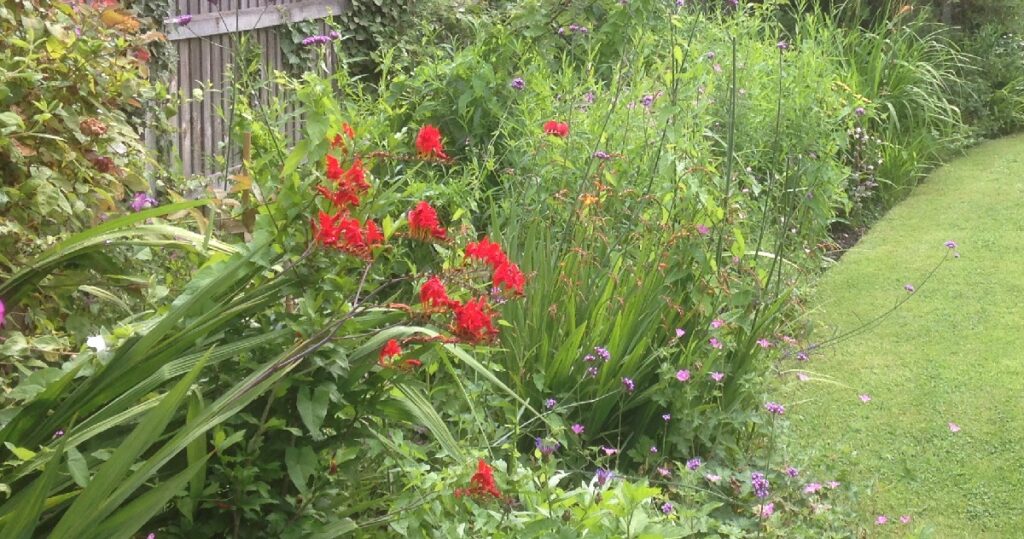
Gardeners spend half their lives managing colour schemes… and the other half being cheerfully misled by plant names.
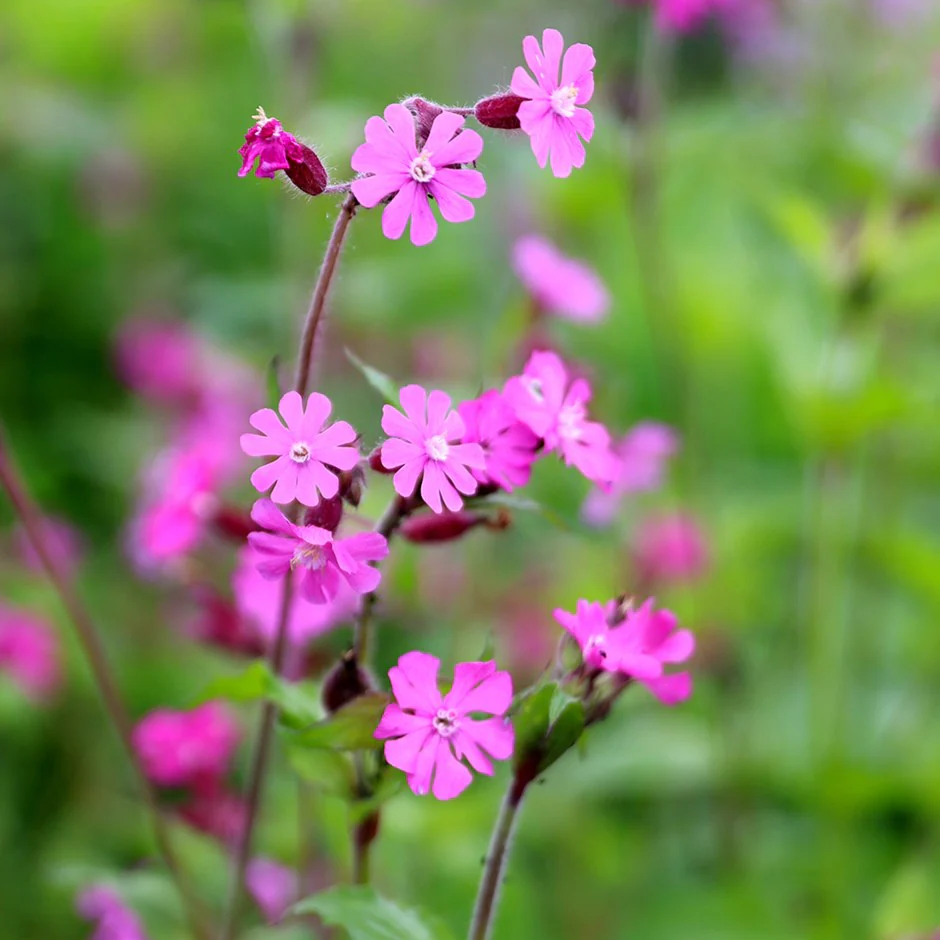
Red Campion (Silene dioica), steadfastly refusing to be red.
Take the familiar Red Campion (Silene dioica), which is not red at all, but something closer to pink. Some call it Pink Campion indeed, though that is easily confused with Rose Campion (Lychnis coronaria). The trouble begins with the word pink, which did not originally refer to a colour at all. Its first gardening home was in the Dianthus genus, whose members had petals with pinked edges, so pink became the colour of pinks.
My wife had a way with birds, as well as being an accomplished dressmaker, and she had a favourite blackbird she called Mrs Pink. She never explained why, but I realised eventually she was referring to the bird’s serrated tail feathers — the result of a narrow escape from a cat — as though cut with pinking shears.
In the opposite direction, hunting pink, as it is known, could hardly be a more emphatic red.
Modern eyes see red as fire engine, post box, poppy. Older usage sees red as anything warm, rusty, ruddy, flushed, and earthy.
When I was growing up in the far northwest of Scotland, many place names expressed their perceived colours. Dubh is black, uaine is green, gorm is blue, buidhe is yellow, and so on. But Gaelic contains two words for red. Dearg means ordinary red — boat bottoms, barn roofs — but the word I was more familiar with was ruadh, which refers specifically to red hair, fur, complexion, and also the general reddish impression that igneous rock can give. A red squirrel is feòrag ruadh. A redhead is nighean ruadh.
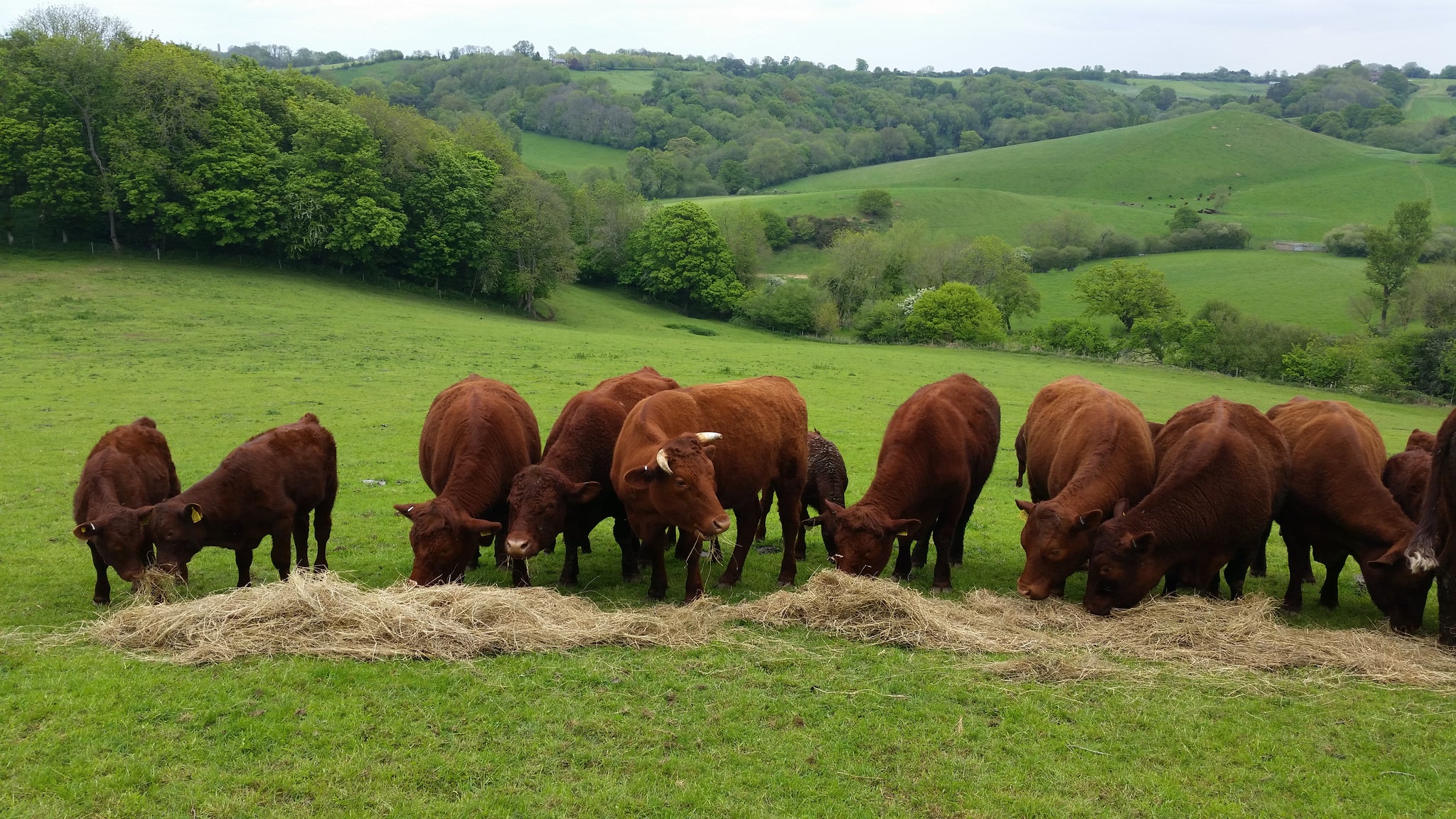
Ruadh in flesh and fur
It feels, somehow, like an older way of seeing. We still have red squirrels, red setters, Red Ruby cattle. And the point is that this older Gaelic colour vocabulary mirrors how gardeners actually perceive colour: warm reds, cool reds, muddy reds, copper reds, blue reds, brown reds.
Gardens recognise these distinctions instinctively. What we casually call red often contains surprising quantities of brown, blue, purple, or orange. Seasonal light alters everything. A red flower in May is not the same red in August. Winter reds — berries, stems, bark — are cooler, deeper, more reticent. Summer reds can feel heated, almost inflated by the light.
And then there is taste, that elusive but decisive force.
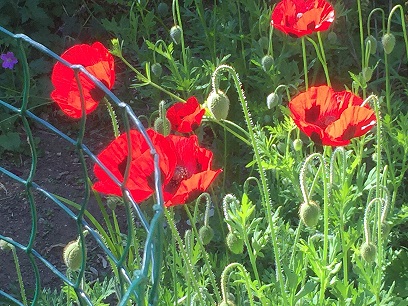
Red has always carried cultural baggage. It is associated with warmth, danger, drama, celebration, vulgarity, luxury, passion, warning. A little red may energise a planting; too much can feel exhausting. In some contexts it reads as richness, in others as aggression.
Perhaps this is why truly satisfying uses of red in gardens are relatively rare. Red is not a background colour. It resists behaving quietly. It works well as an accent, but the accent must be subtle. (Think of those 19th century water-colours of the Norwich School — how they would so often include a little figure in red clothing as a tiny jolt to the senses.)
Handled well, red can be magnificent.
Handled casually, it is unforgiving.
Which may explain why there are gardeners I know, who don’t like red at all.
Leave a Reply