
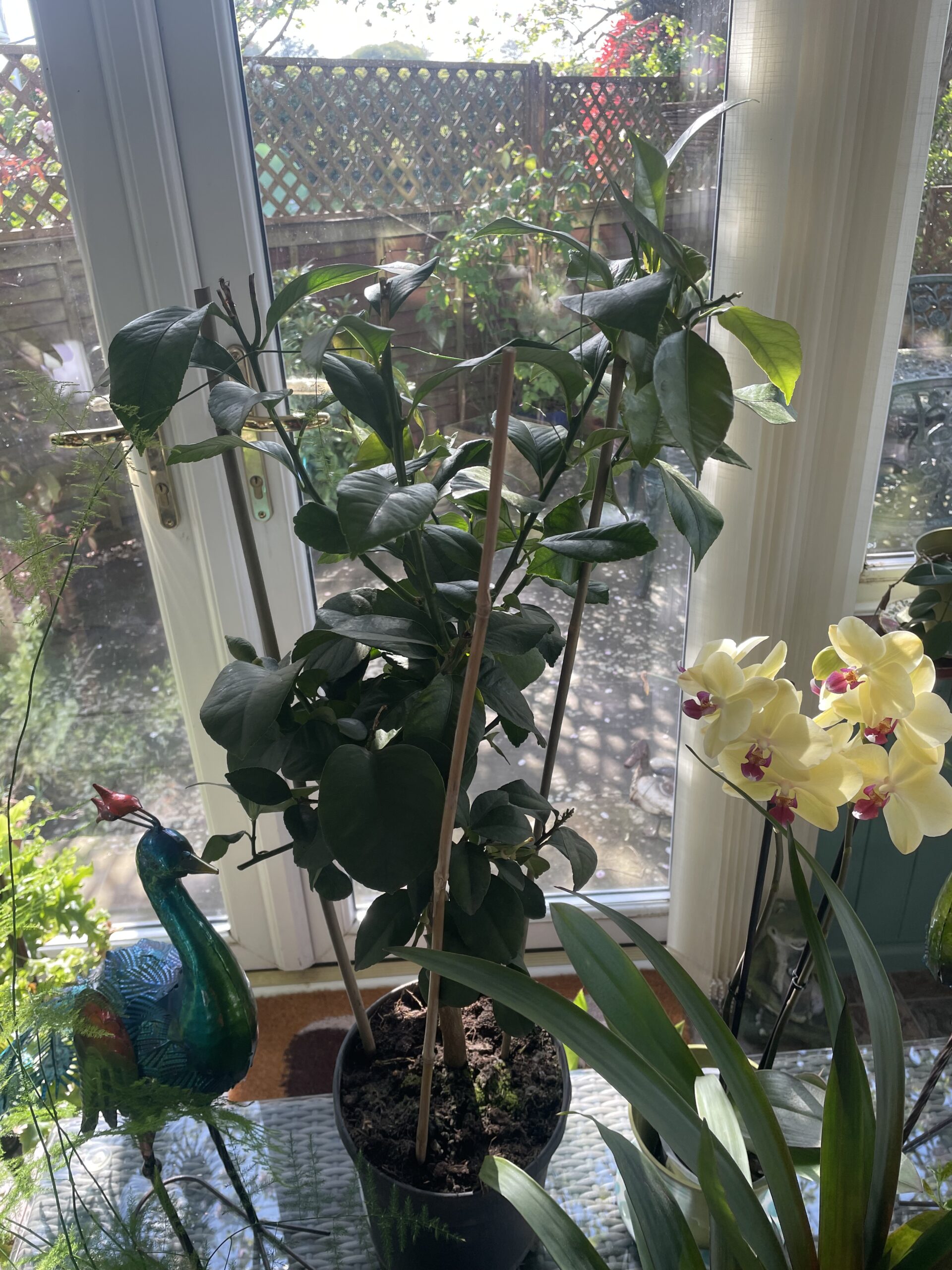
Citrus x limon ‘Four Season’ in Conservatory
A couple of weeks ago I ordered a Sicilian lemon tree from the Daily Mail Garden Shop! “Enjoy fresh, Sicilian lemons from your own tree this year This remarkable ‘Four Season’ Sicilian lemon has been specially bred to thrive in UK gardens. Enjoy fragrant flowers and fresh lemons spring, summer AND autumn!”
It is a pity about the hype that accompanied the offer, because the tree does have some remarkable and useful characteristics, but “specially bred to thrive in UK gardens” is not one of them. It does produce flowers from spring to autumn, so in theory it should have little unripened fruits as well as lemons ready to pick at the same time.
But. Although it is one of the hardiest lemon trees, it will not survive most winters outdoors here, let alone thrive. Fortunately I have a conservatory which I an make sure to keep above 5°C, which it will live in during the winter months, being moved outdoors if and when the summer is similar to the last few, or in a greenhouse that is kept frost free for the winter.
It is quite a demanding tree on the whole. Watering has to be done from the top, and water must be allowed to drain off and the soil dry out between waterings. They like high humidity.
The first thing I need to do is obtain a 14″ heavy pot, with plenty of drainige holes, a wider dish to place it in, on top of three earthenware pot feet (so that water can drain out of the pot, not stagnate in the bottom of it). The soil needs to be either a specific citrus compost, about pH 6-6.5. or a mix of John Innes No 3, with grit, and perlite. Water needs to be rainwater if possible. Otherwise I shall use drinking water (ie from the mains but filtered which is mandatory here to make it fit to drink).
The lemon tree likes bright light (a more useful phrase than ‘full sun’ in my view, and meaning the same thing), and if indoors, mustn’t be near radiators. It needs to be indoors when the temperatures drop below 5°C, and remain indoors until they stay above 5°, so practically that means a good half of the year indoors.
It is a relatively greedy plant too, needing a feed with each watering in the summer, and every week to ten days in the winter. There are citrus composts available which contain the nutrients it likes, for repotting, or top-dressing in late winter, and citrus food from the garden centre
Pruning is done, if at all, in spring, thinning out the centre of the tree so as to admit plenty of air and light, and of course removing branches that look sick or dried up.
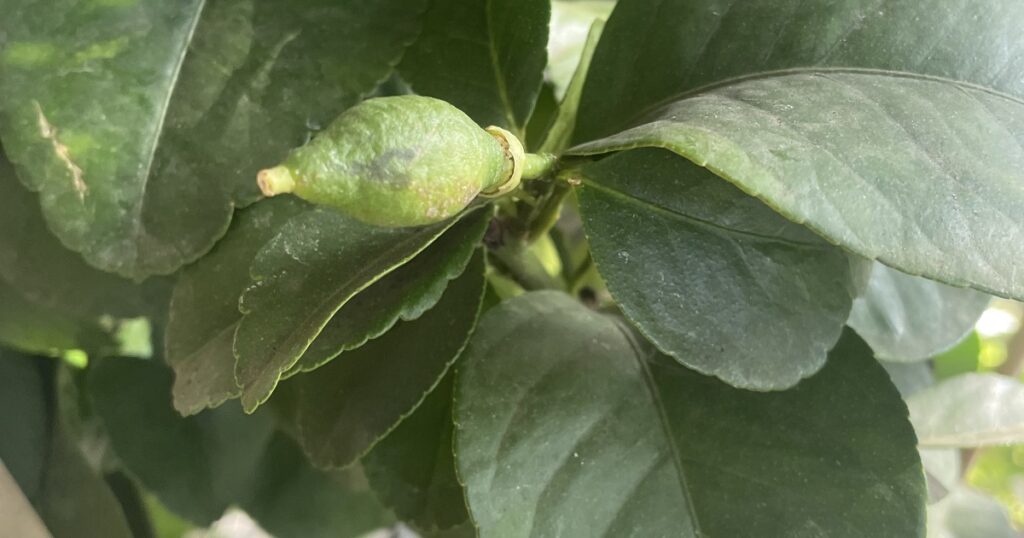
When my tree arrived, I unpacked it carefully, and was annoyed to find that a main branch bearing two little green lemons, had broken and was dangling down. The only thing to do was to prune it off carefully. I wrote to the Daily Mail to point this out, (you never know, they might send me another one), and then realised that the break was probably beneficial. Just like with apple tress, it is better to remove fruit from a young plant because they take a lot of energy to produce, which is better spent on getting the plant settled and well rooted.
I’ve met orange and lemon trees in the Mediterranean, in the Canaries, and in Florida and California, where they seemed to just go on producing without calling for much attention. However I learnt that growing citrus fruit in the United States is an exacting science if the very best quality valuable fruit are to be produced reliably. I fear the same concentration has to be applied to my little lemon tree it it is to succeed.
Leave a Reply