
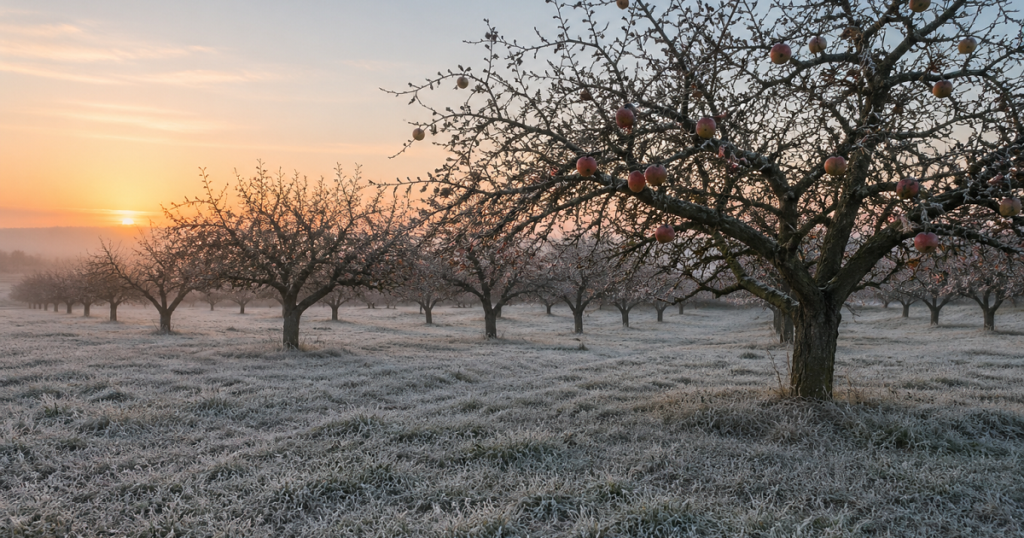
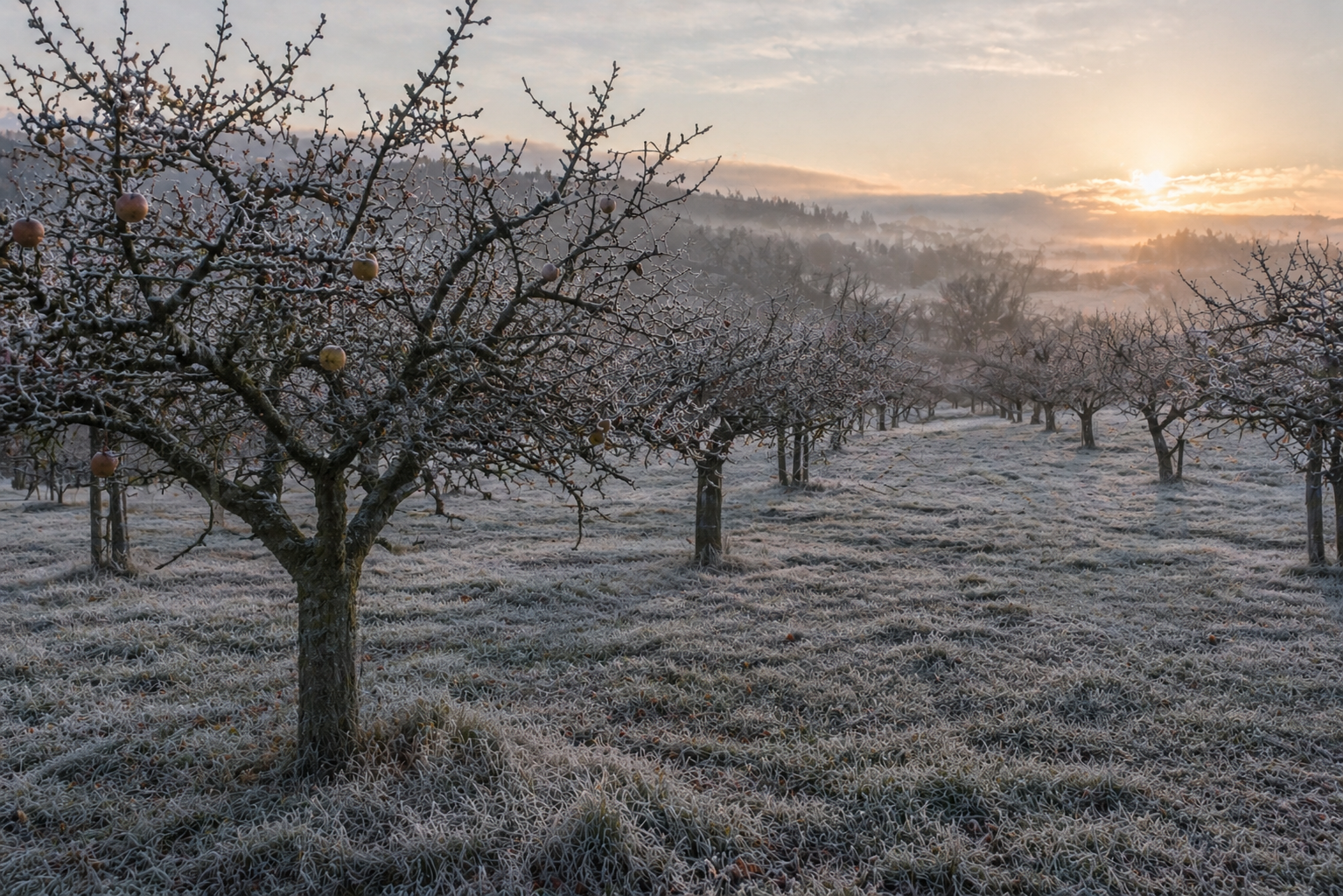
Franklin Nights belong to the West country, and are normally between the 19th to the 21st May.
How did they came so to be, and why might they be significant? It’s a story dating back more than a thousand years: part fact, part legend as to be expected, to which there are at least two variants.
Who was Franklin?
The first version sets the name. In Devon folklore, Franklin was a brewer of ale (or possibly a farmer) in Exeter, who sold his soul to the Devil, in return for limiting the Devon cider industry. The devil’s cunning plan to fulfill his side of the bargain, was to send a late frost to threaten the apple blossom, This was to lead to a shortage of cider apples, and result in the replacement of cider with ale, Franklin’s ale, that year and afterwards. Crediton seems to have had a significant influence in relation to this, and there’s some interesting detail about how Sandford Orchards of Crediton try to keep the story alive these days (along with wassailing in January)
Enter Dunstan, later St Dunstan
The second version sets the dates. It involves Dunstan, who was a clergyman from Somerset who rose to become the first Abbot of Glastonbury, then held several bishoprics in turn, ending up as Archbishop of Canterbury. At some point during his rising career he bought some barley and made beer. The Devil was said to have appeared before him and offered to blight the local apple trees with frost. Dunstan accepted the offer, (really?) and was said to have stipulated the date the frost should hit. It may have been a tale put about by disgruntled cider-makers, who might have thought Dunstan could be doing more to protect their crop, on his feast day, the 19th May, the date of his death in 988 AD. (A sort of 10th century version of ‘fake news’)
It’s clear I think, that something gave rise to the legend. I don’t think an ambitious clergyman would have tried his luck in that way really; on the other hand Somerset was and is a more significant cider producer than Devon, and Dunstan’s first post was at Abbotsbury in Somerset. Moreover, in the flatter, more enclosed parts of Somerset, frost can linger well into spring, settling into the land on still nights. In Devon, where the influence of the sea is rarely far away, it is often lighter and shorter-lived—though, as always, the lie of the land matters more than the map.
The danger these days
The fact is that in many years there has been a strong risk of frost between 18th and 21st May throughout the millennium. Often it hasn’t materialized (none in the past two years for instance), but I’m sure that the first time I put tender young plants out before the Franklin nights, that’ll be the year they hit.
Why the Franklin Nights can occur
During the climate transition in Spring, days are getting warmer, the atmosphere remains unstable, and cold air can still push south. Frosts are most likely on clear, calm nights after a daytime cold snap which allows temperatures to drop quickly. It is these nights to which we should pay most attention, rather than the appearance of a full moon or new moon which many people (including me until very recently), consider signifies a late frost.
Two significant footnotes
There are two footnotes to all this. One is that climate change is almost certainly causing late frosts to occur later in the year not sooner, if they are going to.
The other is that for whatever reason, the Franklin Nights occur at the end of the blossom fall; although cider apples shed blossom later than dessert apples, the shedding is most often over before the Franklin Nights start.
Even so, the Franklin Nights are known about in Dorset, and still command attention if not dread nowadays, in Devon and in Somerset.
Leave a Reply