
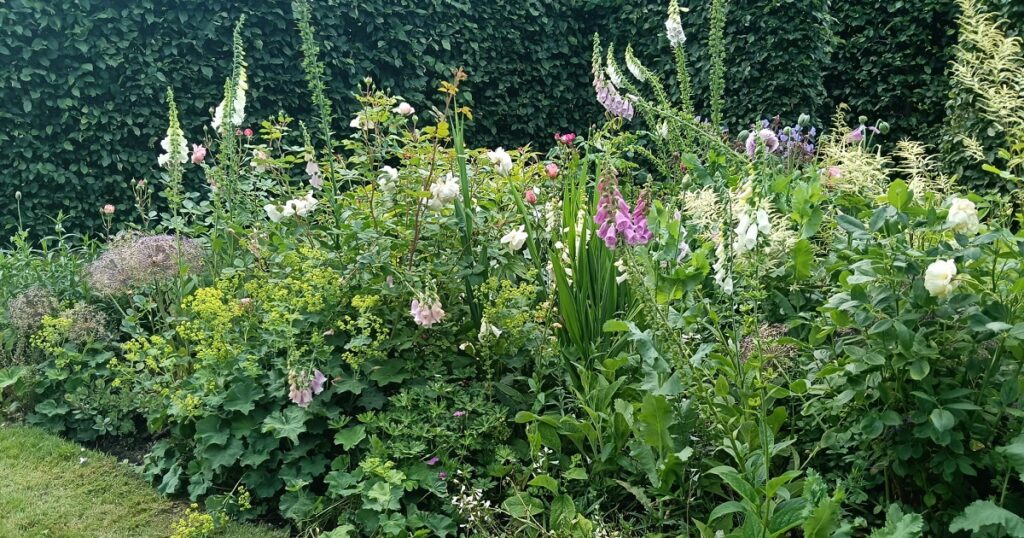
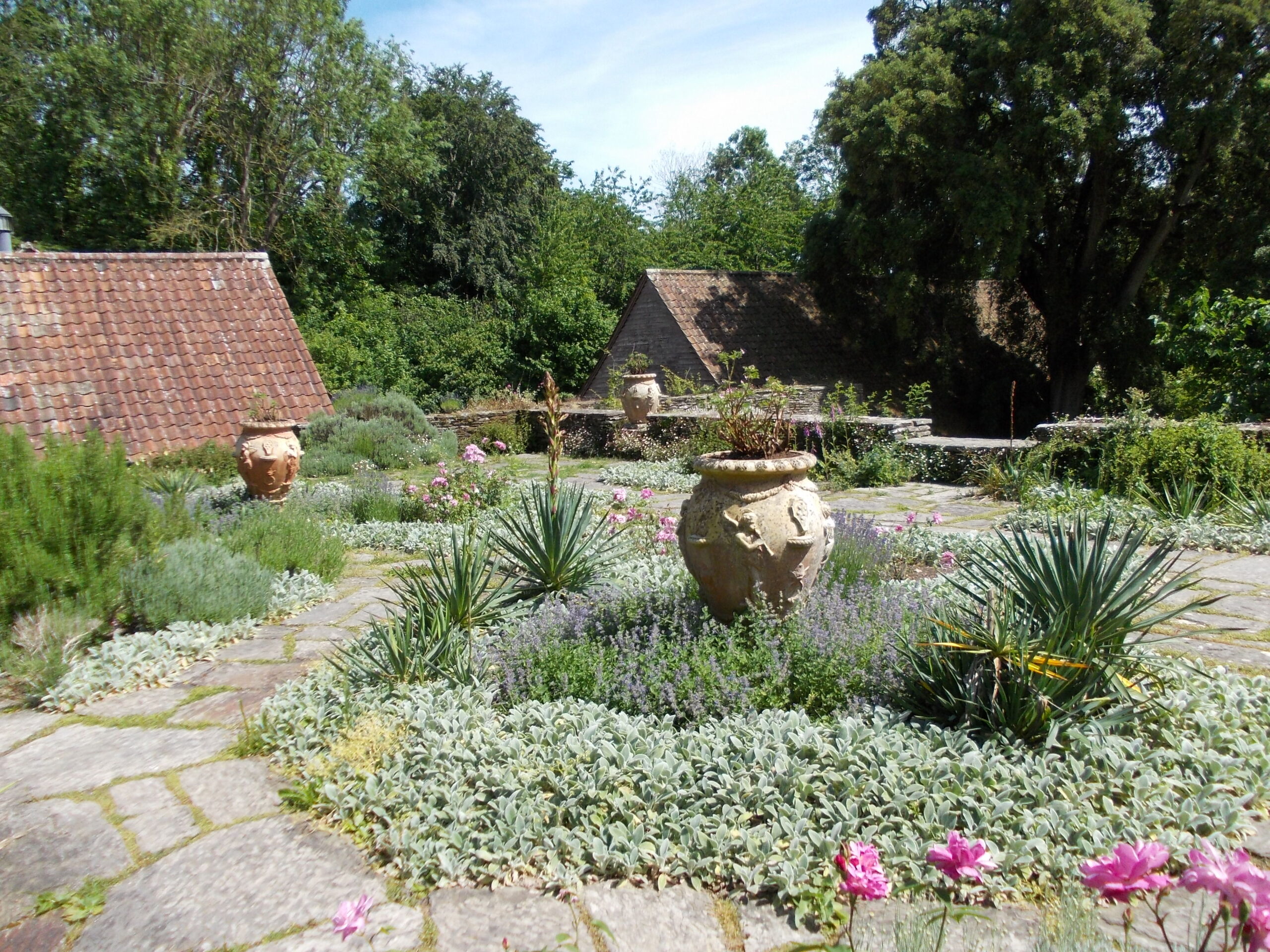
Grey pairings in Gertrude Jekyll’s Dutch garden at Hestercombe
The West Country is not an arid region. It can be wet, green, and lush. Yet gardens here can still suffer badly from summer drought, especially on slopes, thin soils, exposed sites, newly planted borders, and in dry springs followed by sudden heat.
In the West Country, the problem is not usually that rain never comes. It is that it does not always arrive when plants need it, or stay where their roots can use it.
The point is that rainfall is not the same as availability. A shower may freshen the surface without doing much for roots.
The wrong question: “How often should I water?”
This is the question gardeners ask most often, but it is not quite the right one. The better question is “Is usable water available where the plants’ roots are?” For no plants benefit from the gardener’s effort unless water reaches the active root zone and remains there long enough to be used.
Little and often versus seldom and thorough
A damp surface is not the same as a watered plant. So often it’s noticeable how after a light shower, especially on dry soil, the surface may look revived, whilst a centimetre below it the soil is as dry as before. So seldom and thorough should be the normal rule. The total amount of water used may be the same, but with a few exceptions, seldom and thorough is going to be far more effective.
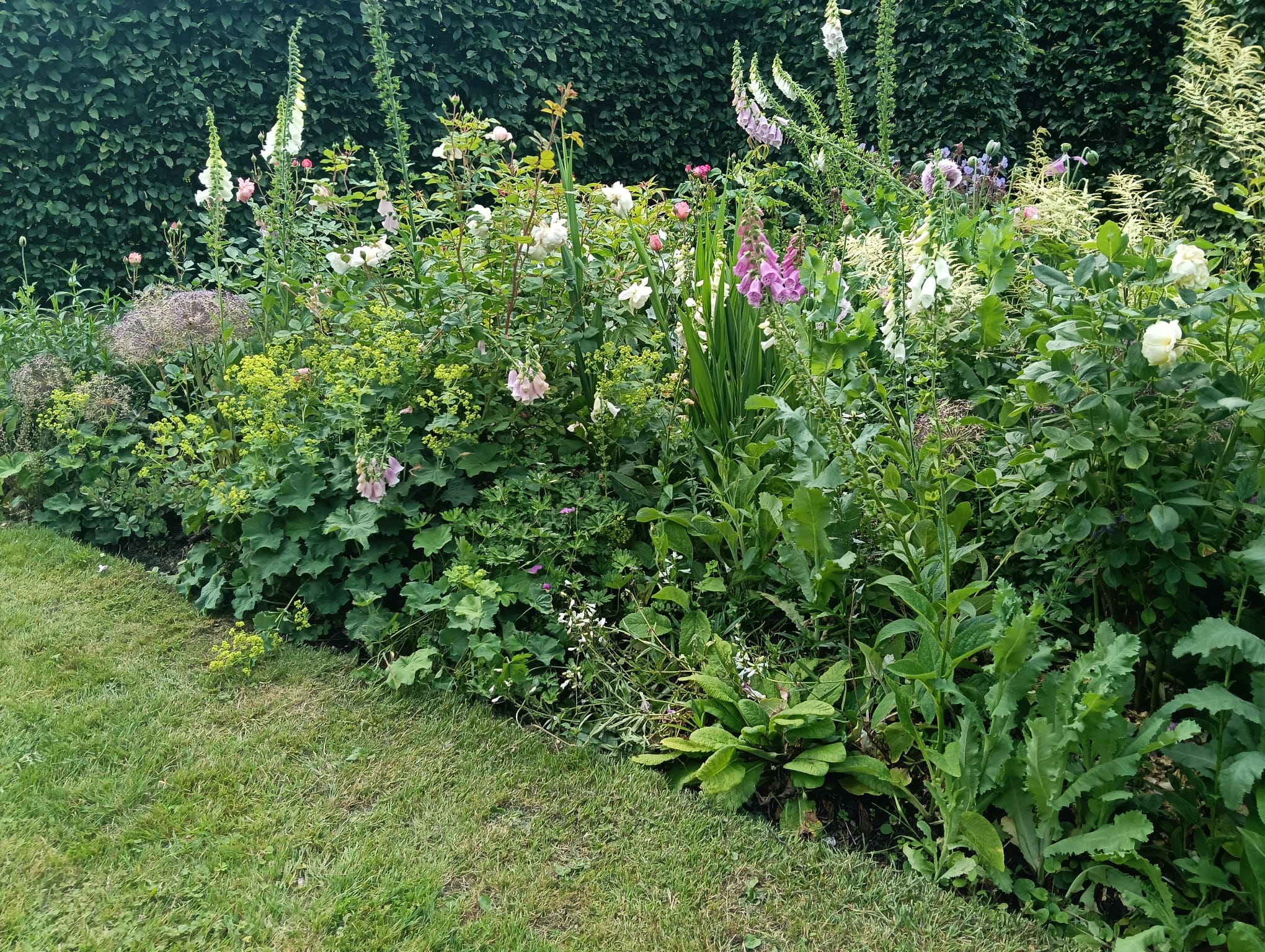
Water-wise gardening begins before the hosepipe is uncoiled: with soil, plant choice, and knowing where water is actually available to roots.
West Country soils: water behaves differently from garden to garden
The treatment that is most vital is the application of plenty of organic material. Heavy clay soils are the most difficult. Clay can hold water well, but in summer it can bake hard, crack, and resist re-wetting. (Farmers know only too well how clay can be impossible to work when still saturated with water, and equally troublesome when it’s baked liked fired earthenware – they have to cultivate it in that time between the two conditions when the soil is friable.) The Devon culm, and lower-lying gardens across the region, need improved soil structure as much as watering. October/November is the time, so that clods can break down in winter frosts. Mulching in the spring is invaluable too, during those often brief spells when cultivations are possible.
Thin or stony soils are to be found on slopes and banks and some exposed sites, draining out quickly and drying out faster than expected. Along the south coast from Dorset westwards, this is common. Here the organic mulches can help water retention.
The gardener’s dream, of moisture retentive free-draining soil, is realised in a few places. Perhaps surprisingly the Dartmoor fringes are obliging in this way. All the same, organic material is a welcome benefit.
Watering depends on the plant’s stage of life
Newly planted trees and shrubs need a watering routine in their first year, perhaps tapering off in the second. After that, their roots should be down enough to cope without watering at all.
Freshly planted perennials need much the same. Annuals are quite likely to need frequent watering, even daily watering in a dry summer, as their roots are not down enough yet. But as always, a thorough soaking is more effective than a daily sprinkling.
Containers are the exception: little and often is necessary in dry weather because the container in which a plant is growing is limited in how much it can hold. A container in full sun is likely to need watering daily at least, if not more.
Soil is the reservoir
Soil is the garden’s reservoir, but only if its structure allows water three things: to enter, and to store, and to make it available. In compacted or neglected ground, water may run off, sit at the surface, or fail to penetrate the root zone. Improving soil structure with organic matter, careful mulching, and avoiding unnecessary compaction increases the amount of water the garden can actually store. The point is not simply that soil “contains” water. It is that good soil behaves like a usable reservoir; poor soil behaves more like a sealed surface, a sump, or a sieve.
Some plants resent thirst; others are built for it
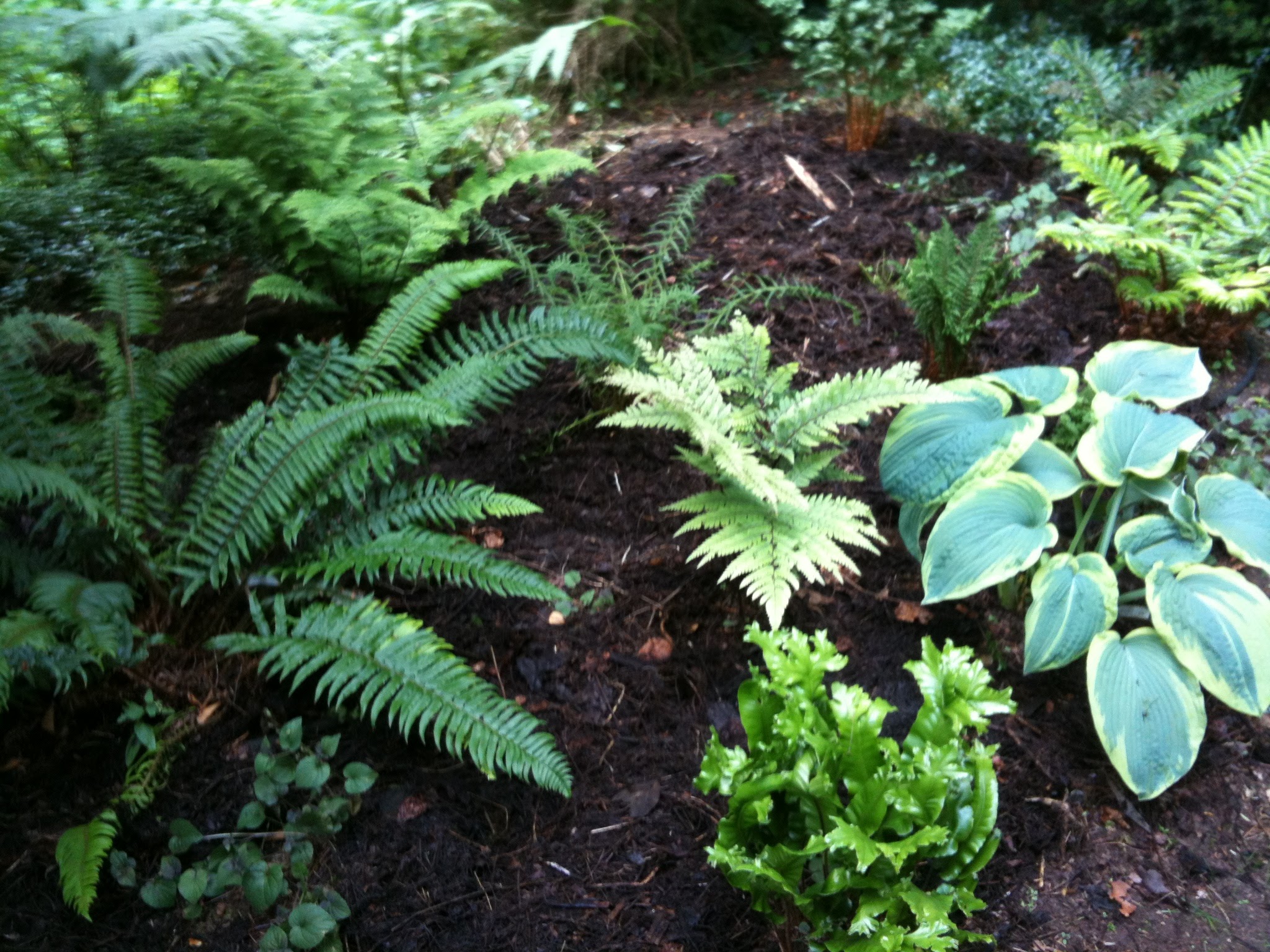
Hostas and ferns pair well, with plenty of water and organic mulch for both
Here is a handful of thirsty ones:
- Ferns: – Matteuccia struthiopteris (Shutttlecock Fern), Osmunda regalis (Royal Fern)
- Hostas: require plenty of water to thrive, but the bigger ones survive indefintitely without.
- Astilbe – tolerate sun or shade, but hate a dry soil. Underlying moisture is ideal. Good with hostas.
- Astrantia – also tolerant of sun or shade, they are best suited to cool, damp conditions.
- Helenium – loves damp soil, and full sun.
- Molinia – very elegant grass; choose a larger one.
- Persicaria amplexicaulis – long-flowering and easy to grow in sun or partial shade.
- Rodgersia – need plenty of space, best in shade by a pond or stream.
- Rudbeckia – Black-eyed Susan, bright bold perennial, very happy in damp conditions.
Of the plants that tolerate dryness, the Mediterranean plants tend to cope best – lavender, rosemary, and the many silver- or grey-leaved plants.
Economical watering: where effort counts most
We need to prioritise the plants that really need watering. They are broadly these:
- New trees and shrubs – ease off in their second year.
- Recently planted perennials
- Anything in a container
- Food crops
- Annuals wanted for immediate performamce
- Valuable or irreplaceble plants
- A dish regularly replenished for wildlife.
Then, no watering these:
- Established shrubs – if they can’t manage, they are likely to be in the wrong place to begin with.
- Lawns – however brown a lawn may get, it always reverts to green.
- Broad surface sprinkling – never appropriate except in an emergency.
Irrigation and irrigation systems
Irrigation systems can be useful but should not be a substitute for judgement. The best policy is to collect as much as possible from roof water into in butts, as practicable. The relatively cheap black or green plastic water butts can be disguised by bamboo-reed screening. There are many plants that prefer rainwater anyway.
Simple DIY irrigation systems for pots need not be a huge expense in tems of outlay, but will be costly to run unless all fittings are made sure of being free from leaks. Soaker hoses can work in some soils, but it is unpredictable, and in very light soils can increase the water bill a lot, whilst making little difference on the ground.
Designing for future water shortage
The best watering decision is often made before anything is planted. Future water shortage is not solved mainly by dragging hoses around in August. It is addressed by choosing plants, soil preparation, spacing, shade, grouping, and expectations intelligently from the beginning. There are a few clear principles.
Start with the site, not the plant list
The designer’s remit needs to include where it is hottest or exposed to drying wind; where water sits or runs off; where it is shady; where the soil is deep, shallow, sandy or compacted or clayey. Choosing plants first and then tring to make the site comply is the wrong way round. We come back to ‘right plant, right place’ all over again.
Group plants by water need
The design principle is to group plants according to their water need, so that we don’t end up with a whole garden being watered for the sake of a few demanding plants.
Use drought-tolerant plants honestly
It’s important to remember that drought-tolerant plants need water in their first season while roots establish. Many such plants hate winter wet more than summer dry, particularly relevant in the West Country. (When I lived in a low rainfall area I would cut back lavender deep into the old wood without a qualm; in Devon, it’s death.)
Plants from Mediterranean, steppe, prairie, or rocky habitats may be useful, but only where drainage, light, and winter conditions suit them. Those Mediterranean type plants with grey or silver leaves I mentioned earlier an all help — but not every one belongs in every West Country garden. Along the Jurassic Coast maybe; in the Torridge Culm, no.
So as a designer, I am not just arranging plants, but improving the ground that supports them.
Conclusions
What we need to remember, whether as gardeners or designers, are these key things:
- Study the conditions throughout the garden: soil, shade, exposure, slope, drainage and shelter.
- Improve soil structure with organic matter, so that water can enter the ground, be held there, and remain available to roots.
- Group plants with similar water needs, so that watering can be targeted rather than spread wastefully across the whole garden.
- Choose plants suited to the places where they are expected to grow.
Leave a Reply