
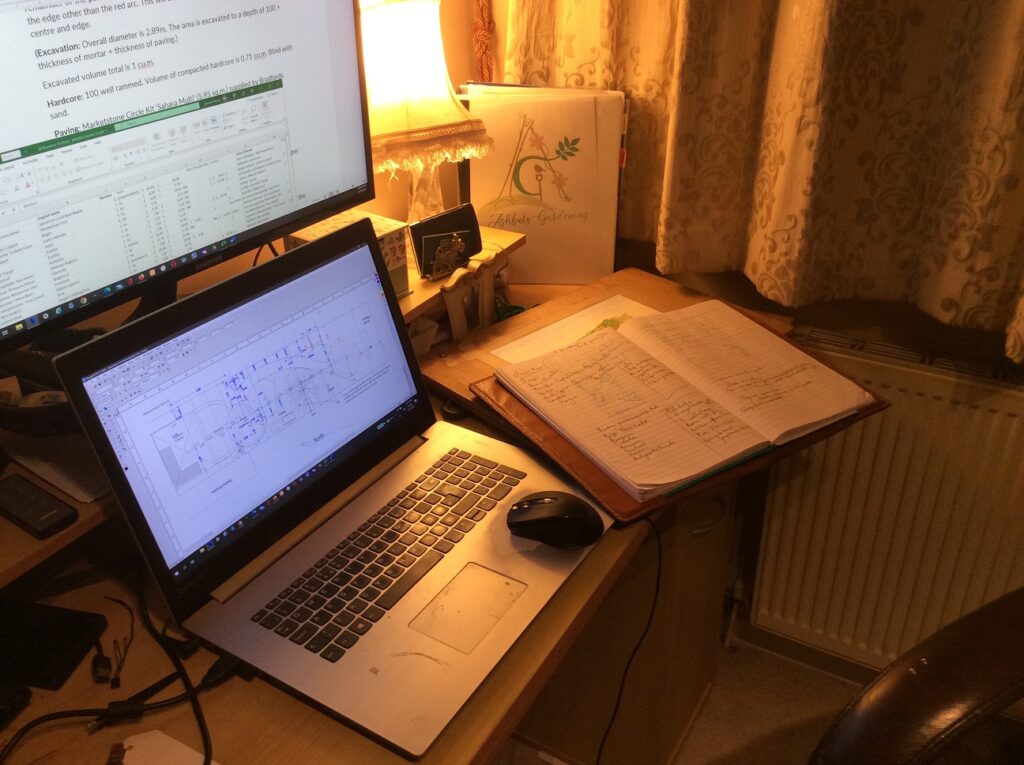
 When faced with a new garden space — or an old one that has been neglected — there is a natural temptation to want a finished plan straight away. This is especially true for people for whom a garden may be new or unfamiliar. A clear drawing can feel reassuring: a way of imposing order and certainty on something that otherwise feels open-ended.
I did exactly that once, when I was barely out of my teens and, as one does at that age, knew everything. The result was a hopeless mess. What I learned, and have appreciated ever since, is that living with a space and understanding its problems needs to come before arriving at certainty and solutions.
It used to be said that a new garden owner should see their garden through all the seasons before making major decisions. For most people, that simply isn’t realistic. What is realistic is careful observation. Photography now makes it easy to record a garden at different times of day, in different weather, and over the course of the year. Notes taken alongside photographs can reveal patterns that aren’t obvious at first glance: where water lingers, where frost settles, where plants struggle or thrive.
Seasonal change is only one form of change. Another has to do with how a garden is meant to be used, not just now, but in the future. Will there be children, or pets? How much time can realistically be devoted to gardening? Is ongoing help likely to be needed? And how interested is the owner in gardening itself? These questions don’t always have immediate answers, and they often shift once people begin to live with their garden rather than simply imagine it.
There is also the broader influence of the climate. Hotter, drier summers and wetter, windier winters are already affecting how gardens behave. Some plants cope well with these conditions, others less so. Observing how an existing garden responds to these pressures can be invaluable when thinking about what to keep, what to change, and what to introduce.
For me, garden design is less a product than a process. That may sound vague at first, but careful observation allows clarity to emerge. Notes about soil, drainage, light, and exposure gradually set the parameters within which design decisions make sense. From there, plans can be drawn and planting chosen with ‘right plant, right place’ in mind.
Cost is often a concern, and understandably so. A garden is part of a home, like a kitchen or a living room, but usually on a much larger scale. Thoughtful design and implementation involve expense, but they also bring lasting value. A well-designed garden tends to make a property more appealing and more flexible in how it can be used, even if its financial impact is difficult to quantify precisely.
Taking a gradual approach can also help with budgeting. Work can be staged, priorities can be tested, and expensive mistakes avoided. In a first year, annuals can be planted to give some colour and interest while the permanent elements are still being planned. Many people new to gardening quickly discover how much there is still to learn. Established gardeners are often generous with both advice and plants, and growing from seed or cuttings — while slower — is far less costly than buying everything in.
When things move too quickly, certain details tend not to show themselves until much later, often when they are harder and more expensive to address. Allowing time for a garden to reveal itself usually leads to better decisions, and to a space that feels more settled and more personal as a result.
For many people, this slower engagement becomes part of the pleasure. A garden begins to offer something new each day, even in winter. There will be failures, as there always are in gardening, but they become part of the learning rather than a source of frustration.
If you find yourself thinking about your garden a little differently after reading this, that is a good place to start.
Leave a Reply